Understanding 'Charge-Off' vs. 'Collection': Why the Distinction Matters for Your Credit
Confusion between charge-offs and collections is common. Learn what these terms mean for your score and how they affect your credit report differently.
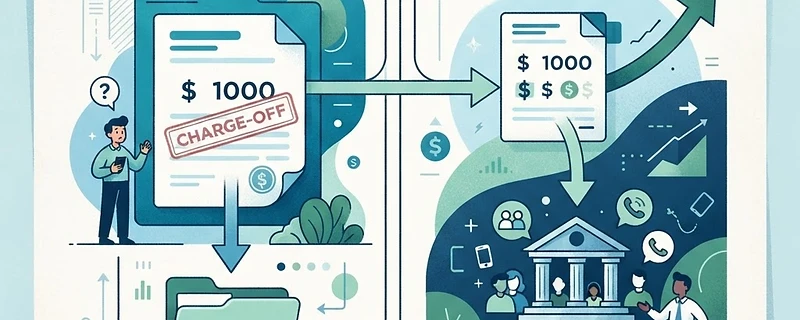
When you review your credit report, seeing derogatory marks can be stressful. Among the most confusing terms are 'charge-off' and 'collection.' While both indicate a failure to pay a debt, they represent different stages of the recovery process and carry distinct weight regarding how they influence your credit score and your legal obligations. Understanding these differences is the first step toward managing your financial health effectively. A charge-off typically happens when a creditor determines that a debt is unlikely to be collected. This is an internal accounting procedure. For tax purposes and regulatory compliance, the lender writes the debt off as a loss on their books. However, it is crucial to understand that 'written off' does not mean 'forgiven.' You still owe the balance, and the account will remain on your credit report for seven years from the date of the original delinquency. ## What Happens During a Charge-Off When a lender charges off an account, it is usually because you have missed payments for 180 consecutive days. The creditor has essentially stopped trying to collect the debt internally and has marked it as a bad debt. On your credit report, you will see a 'Charge-Off' status next to the account. This status serves as a major red flag to future lenders, signaling that you failed to fulfill the original terms of your credit agreement. Even if you pay off a charged-off account, the status will not disappear from your report; instead, the balance will be updated to 'zero' or 'paid charge-off,' but the derogatory notation persists until the seven-year window expires. ## The Shift to Collections After a charge-off, the original creditor may decide to sell your debt to a third-party collection agency or hire one to collect on their behalf. If the debt is sold, you might see the original account listed as 'transferred' or 'sold' with a zero balance, and a new entry will appear for the collection agency. This is where many consumers become overwhelmed because they see two entries for the same debt. It is important to verify that the balance is not being reported twice. The collection agency now has the right to reach out to you to recover the funds. They are subject to the Fair Debt Collection Practices Act (FDCPA), which provides you with protections against harassment and requires them to validate the debt upon your request. ## How These Items Impact Your Credit Score Both charge-offs and collections are considered 'major derogatory' items. They can significantly lower your credit score because they demonstrate a pattern of non-payment. Because a collection account is often viewed as a more recent or more aggressive stage of delinquency, some modern credit scoring models may weigh them slightly differently, but both are detrimental. The impact of these marks decreases over time. A charge-off or collection that occurred five years ago will generally hurt your score much less than one that occurred last month. However, because these items remain on your report for seven years, they can continue to influence your ability to obtain loans, credit cards, or housing for a long period. ## Steps You Can Take Once you identify these entries on your report, start by verifying the accuracy of the data. Under the Fair Credit Reporting Act (FCRA), you have the right to dispute any information that is incomplete, inaccurate, or unverifiable. You should obtain your free credit reports from the three major bureaus to see how these debts are being reported. If the balance is incorrect, or if the debt is not yours, you can initiate a dispute. If the debt is legitimate, consider communicating with the collector to reach a settlement. Always get any agreement for a 'pay-for-delete' or a settlement offer in writing before making a payment, though keep in mind that bureaus are not legally required to remove accurate negative information. This article is general information, not legal, financial, or tax advice. ## Take the next step Managing your credit report shouldn't be a guessing game. If you are ready to monitor your status and take control of your financial history, you can start with a free credit checkup at /checkup. For deeper tools and guided assistance in navigating your report, see Pro pricing to explore our full suite of privacy-first credit repair features.
Ready to take control of your credit?
Start free, or see how Pro can speed things up.
This platform provides self-help tools and educational information. It is not a credit repair organization, credit bureau, lender, financial institution, or law firm. Use of this platform does not create an attorney-client relationship. Results are not guaranteed. Accurate negative information generally cannot lawfully be removed merely because it is unfavorable.