What Are 'Consumer Disputes' and Why Are They Different From Standard Investigations?
Learn the technical difference between a standard credit bureau investigation and a formal consumer dispute to ensure your data stays accurate.
When you notice an error on your credit report, the immediate instinct is to fire off a quick online dispute. However, understanding the legal distinction between a general investigation request and a formal consumer dispute under the Fair Credit Reporting Act (FCRA) can change how you approach correcting your financial history. Knowing the process helps you ensure the credit bureaus actually address your concerns rather than just dismissing them as frivolous.
Understanding the FCRA and Your Right to Dispute
The Fair Credit Reporting Act (FCRA) is the primary federal law governing the accuracy, fairness, and privacy of information held by the three major credit reporting agencies: Equifax, Experian, and TransUnion. When you believe information on your report is inaccurate, incomplete, or unverifiable, you have a statutory right to request a reinvestigation.
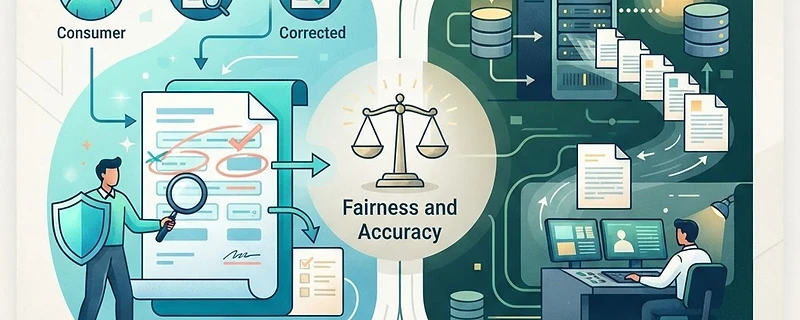
A standard inquiry is often how the process starts—you see something wrong, and you notify the bureau. The bureau then has a legal obligation to conduct a reasonable investigation, typically within 30 days. However, "consumer dispute" carries a specific weight in legal terms. It implies you are formally challenging the "accuracy or completeness" of an item of information. When you frame your request as a formal dispute, you are triggering specific obligations for the credit bureau to contact the data furnisher, verify the information, and provide you with a written response detailing their findings.
The Role of the Data Furnisher
It is a common misconception that the credit bureaus maintain all your financial data from scratch. In reality, they are aggregators. They receive information from "data furnishers"—banks, credit card companies, collection agencies, and lenders. When you file a dispute, the bureau forwards your request to the relevant furnisher.
If you simply send a vague letter asking to verify an account, the furnisher may treat it as a low-priority verification request rather than a formal dispute regarding the accuracy of the data. To get results, you must be specific about what is wrong. Are the dates of late payments incorrect? Is the balance reported higher than what you owe? Is the account not yours? Providing clear documentation, such as account statements or payment receipts, converts a generic inquiry into a robust consumer dispute that forces the furnisher to conduct a real review.
Why Some Disputes Get Rejected
The credit bureaus have the legal right to label a dispute as "frivolous or irrelevant" if it lacks sufficient information or if you are simply re-disputing a previously verified item without new evidence. This is the most common pitfall for consumers. If you send the same letter three times without attaching new proof, the bureau is not legally required to conduct a full reinvestigation.
Before you hit the submit button on a dispute, ask yourself if you have provided enough context for the furnisher to identify the error. A dispute that lacks a clear explanation of why the data is wrong is far more likely to be ignored. By treating your dispute as a formal request for correction backed by evidence, you force the bureau to follow the FCRA timeline and provide a thorough response.
Documenting Your Process
Effective credit repair is rarely about luck; it is about paper trails. Whether you are dealing with an incorrect address, an account that should have aged off your report, or identity theft, you must keep copies of everything. Every letter you send, every tracking number for your mailed disputes, and every response you receive from the bureaus should be archived.
If the bureaus fail to correct verified errors, your documented correspondence becomes your most valuable asset. This history of communication is what proves that you exercised your rights and that the system failed to fulfill its legal obligations. Consistency, clarity, and persistence are the cornerstones of successfully managing your credit file over the long term.
This article is general information, not legal, financial, or tax advice.
Take the next step
If you are feeling overwhelmed by the dispute process or need help analyzing your credit file for errors, our platform is here to support you. You can see Pro pricing for advanced features or start today with our free credit checkup at /checkup.
Ready to take control of your credit?
Start free, or see how Pro can speed things up.
This platform provides self-help tools and educational information. It is not a credit repair organization, credit bureau, lender, financial institution, or law firm. Use of this platform does not create an attorney-client relationship. Results are not guaranteed. Accurate negative information generally cannot lawfully be removed merely because it is unfavorable.