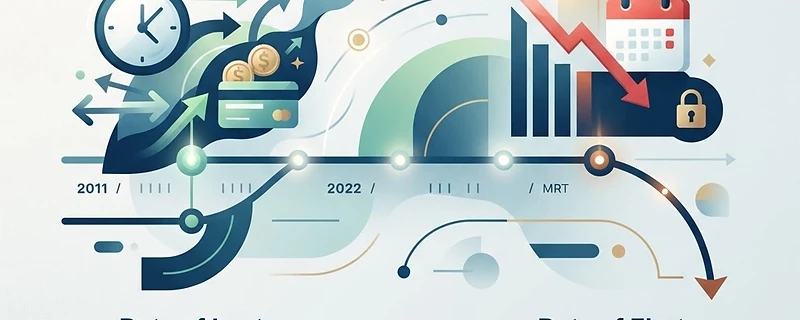
Understanding 'Date of Last Activity' vs. 'Date of First Delinquency'
Knowing the difference between these two critical dates can save you from keeping old debt on your report longer than legally allowed.
When you review your credit report, you will see a variety of dates attached to each account. Two of the most misunderstood yet critical dates are the 'Date of Last Activity' (DOLA) and the 'Date of First Delinquency' (DOFD). Understanding these dates is essential because they determine how long a negative item, like a late payment or a collection, remains on your credit file before it must legally be removed.
Defining the Date of First Delinquency
The Date of First Delinquency is the most important date for the longevity of a negative entry on your credit report. Under the Fair Credit Reporting Act (FCRA), most negative information—such as a late payment or a collection account—must be removed from your report seven years from the date of the original delinquency. This date is the specific day you first failed to make a payment on the account and never brought the account current again.
Crucially, the seven-year clock starts ticking from this specific date, not from the date a collection agency bought the debt or the date you last spoke to a collector. If you stop paying a credit card bill in January 2020 and never pay it again, the item should be removed by January 2027, regardless of how many times the account was sold to different collection agencies or how many times they contacted you.
What is the Date of Last Activity?
The Date of Last Activity is exactly what it sounds like: the last date any action occurred on an account. This could be a payment, a charge, or even a communication between you and the lender. While this date is often used by creditors to track account status, it is frequently confused with the DOFD by consumers and sometimes by debt collectors.
It is vital to realize that a new payment or a simple conversation with a collector does not 'reset' the seven-year reporting clock established by the DOFD. If a debt collector tells you that making a small payment will 'refresh' the account or help your credit, they are referring to the statute of limitations for being sued, not the federal reporting limit under the FCRA. Refreshing the activity on a debt might restart the clock on the legal ability of a collector to sue you in court, but it does not extend the time the debt can legally appear on your credit report.
The Dangers of 'Re-aging' Accounts
'Re-aging' occurs when a creditor or collection agency incorrectly reports the DOFD as a more recent date than it actually is, effectively extending the time the debt stays on your credit report. This is a violation of the FCRA. For example, if a collector reports a debt as having a DOFD of 2023 when it actually originated in 2019, they are improperly keeping an old, expired debt on your record for four extra years.
If you believe an account is being re-aged, you have the right to dispute the accuracy of that date with the credit bureaus. When you submit a dispute, you should provide evidence of the actual delinquency, such as old bank statements or letters from the original creditor. The credit bureaus are required to investigate your claim within 30 to 45 days. If the bureau or the creditor cannot verify the accuracy of the date, they must update or remove the negative entry.
How to Verify Your Dates
To ensure your report is accurate, you should pull a copy of your credit reports from all three major bureaus. Look for the 'Date of First Delinquency' or 'Estimated Month/Year the item will be removed' fields. If these fields are missing or seem inconsistent across the three bureaus, it is a red flag. You should keep records of any communications with collectors to protect yourself, as collectors may try to pressure you into making payments that extend the window during which they can legally sue you in civil court.
This article is general information, not legal, financial, or tax advice.
Take the next step
Managing your credit report requires diligence and an understanding of your legal rights. If you want to identify errors or learn more about your credit status, start with a free credit checkup at /checkup. For ongoing support and tools to help you manage your dispute process, see Pro pricing to get started with our platform.
Ready to take control of your credit?
Start free, or see how Pro can speed things up.
This platform provides self-help tools and educational information. It is not a credit repair organization, credit bureau, lender, financial institution, or law firm. Use of this platform does not create an attorney-client relationship. Results are not guaranteed. Accurate negative information generally cannot lawfully be removed merely because it is unfavorable.