Understanding Credit Bureau Metro 2 Reporting: Why Your Data Isn't Always Accurate
Learn how the Metro 2 reporting standard shapes your credit file and why data inconsistencies occur between your lenders and the credit bureaus.
When you look at your credit report, you see a collection of dates, account balances, and payment statuses. While it looks like a simple summary, it is the result of a massive, automated data transfer process known as the Metro 2 format. Understanding this system is key to recognizing why your credit report might show errors and how to address them effectively under the Fair Credit Reporting Act (FCRA).
What is the Metro 2 Format?
The Metro 2 format is a standardized protocol developed by the Consumer Data Industry Association (CDIA). It serves as the primary language that lenders and data furnishers use to report your credit activity to the three major credit bureaus: Equifax, Experian, and TransUnion. Before this standard existed, credit reporting was highly inconsistent, making it difficult for lenders to get a clear picture of a borrower's history. Metro 2 provides a rigid structure that dictates how every piece of information—from your account opening date to your monthly payment status—is coded and transmitted.
How Data Furnishing Works
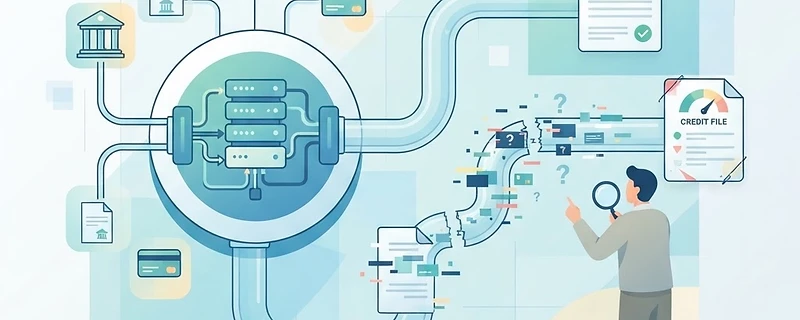
Every month, your creditors (banks, credit card companies, and loan servicers) compile a "tape" or electronic file containing the status of every account they hold. This file is formatted into the Metro 2 structure and sent to the credit bureaus. Once received, the bureaus' automated systems ingest this data and update your credit file without manual oversight. This process is designed for speed and scale, processing millions of account updates across the country daily. Because this process is almost entirely automated, even a small error in the way a lender formats the data can cause a "translation error" that shows up as inaccurate information on your report.
Common Metro 2 Translation Errors
Because the Metro 2 format relies on strict codes, minor formatting mistakes by the lender often lead to significant reporting issues. For instance, if a lender inadvertently reports a payment as 'late' when it was actually 'current' due to a programming error in their Metro 2 output, that status code will be reflected in your credit history. Other common issues include mismatched account ownership codes or improper date reporting. If your lender's system fails to correctly map your data into the required fields, the credit bureau’s software may misinterpret the entry. This is why you might see a closed account labeled as 'open' or a zero-balance account incorrectly showing a balance.
Your Rights When Data is Reported Incorrectly
The FCRA provides you with the right to dispute inaccurate information directly with the credit bureaus or the data furnisher (the lender). Under the law, once a dispute is filed, the credit bureau has a legal obligation to conduct a reasonable investigation, typically within 30 days. When you dispute an item that appears to be a result of a Metro 2 coding error, you are asking the bureau to verify the accuracy of the data with the source. If the furnisher cannot verify that the information was reported correctly according to the standard, they are required to correct or delete the inaccurate entry. Documentation, such as bank statements or correspondence showing the actual status of your account, is crucial when filing these disputes to prove that the Metro 2 reporting does not reflect reality.
Why Automated Disputes Often Fail
Because the credit bureaus' systems are built to process data provided by lenders, they are naturally inclined to trust the automated files they receive. Many disputes are processed through a system called e-OSCAR, which allows the bureau to send a simplified version of your dispute to the lender. If the lender simply confirms that their automated Metro 2 file is 'correct' according to their own records, the bureau will often keep the information as is. To break through this, your dispute needs to clearly identify the discrepancy between the data reported and your own verifiable financial records, highlighting the specific inaccuracy that occurred during the furnishing process.
This article is general information, not legal, financial, or tax advice.
Take the next step
Managing your credit report requires diligence and an understanding of how data flows through the financial system. If you suspect errors in your file, start by reviewing your free credit checkup at /checkup. To gain access to our full suite of tools and resources to help you manage your disputes efficiently, see Pro pricing.
Ready to take control of your credit?
Start free, or see how Pro can speed things up.
This platform provides self-help tools and educational information. It is not a credit repair organization, credit bureau, lender, financial institution, or law firm. Use of this platform does not create an attorney-client relationship. Results are not guaranteed. Accurate negative information generally cannot lawfully be removed merely because it is unfavorable.